Wednesday, November 28, 2012

Building a Gentleman's Wardrobe - Part 1


Building a wardrobe that spells success is an obvious challenge for most men today. The subtle art of making a good first impression depends to a large degree on how one dresses. Why this sartorial skill has all but disappeared is puzzling. Let’s have a look at where to begin building a reliable and affordable wardrobe that you can feel confident represents you and your company in a professional light.


A professional businessman should wear a dark suit, either gray or navy blue. Black is a color to avoid, as it is too severe and usually reserved for formal occasions or funerals. Brown is a color best worn in the country and is considered informal. Off the rack suits generally hang sloppily and need altering. One can use a local drycleaner for some basic alterations, but nothing beats the eye of a seasoned tailor to know how to make a suit fit properly. Buying a suit at a high end men’s shop will cost you a bit more, but is well worth the investment. The ultimate suit is made-to-order and can cost upwards of $2000, again worth every penny. Nothing states confidence or feels better than a beautifully tailored suit. A top end men’s haberdasher generally has much finer materials to choose from and is a relationship that will pay you untold dividends.
Note: a top tailor will ask what you normally carry in your pockets and fit you accordingly. No one should have bulging or jingling pockets.

A clean fresh white shirt is appropriate for any businessperson. Dressing for success leads to success. Shirts should be cotton, not polyester and should have a pointed collar, either button down or plain. To decide which is best for you is trial and error. One’s personal style depends to a large extent on one’s body style and facial shape and on one’s taste. If you don’t claim a particular style yet, rely on the advice of a style and image consultant. A good clothier can also come to your rescue! I avoid colored shirts for formal business situations as they are less formal

Thursday, November 22, 2012

Thanksgiving


Ready or not, it's that time of year again when we pop that oversized turkey into the oven and hope for the best and that it's moist and delicious! Perhaps it's time to shine the silver and polish the wine glasses reserved for special occasions. It is most certainly a time for families to get together and give thanks for the bounty provided by the good earth and for the many blessings of our lives. Although gratitude is an expression of thanks which we hopefully develop as a habit, even in our busy lives, Thanksgiving Day has rituals and customs which are special. For one thing, it is a time when families and close friends gather to share in a feast. In many cases, guests are asked to help out by either providing a part of the meal, such as a vegetable dish, a dessert, an hors d'oeuvres or even by performing a task such as carving the turkey.

I am often asked to carve the bird or roast wherever I go for reasons, which still elude me. I imagine if a host is not acquainted with carving it will be left to someone like me or another guest. And there are those times when speed and precision do come in handy if the host is not adept at carving. Perhaps the art of carving which is an intricate part of the Thanksgiving holiday and a tradition ought to be part of an etiquette lesson. As with any skill, if it is taught properly and practiced it will make a perfect addition to any holiday. Whoever is carving, be sure that there is a sharp knife available and all the other tools necessary to make carving and serving the all-important bird on Thanksgiving. There are many ways of carving just as there are many recipes for cooking the perfect turkey. All methods work when executed properly.
This celebration comes at the end of the fall harvest. This year's bounty was especially plentiful and therefore there is a lot for which to be thankful. Expressing our thanks is an important tradition to pass on to our children and grandchildren. Instilling the virtues of feeling thanks and giving thanks are customs which permeate human societies everywhere. It is what makes societies healthy and able to thrive.
In the seemingly busy lives which we lead, sometimes we not only forget to give thanks but we also are guilty of not feeling gratitude in the first place. Such occasions as Thanksgiving afford us the opportunity to take the time to both feel and express our gratitude for the lives with which we are blessed. Perhaps focusing on only that for which are grateful gives us a chance to see some of our hardships and challenges as opportunities. Even family squabbles can be put into perspective and viewed in a different light if we were to stop and count our blessings of even having a family with whom to celebrate in the first place.
As I have discussed in previous columns, I am not a fan of putting people on the spot at the dinner table. However, there is no better place for people to be given the opportunity to express what they are feeling thankful for than at the table. If offered as a voluntary chance to speak, those who are in the mood and feel so moved can show others how easy it is, and by their example encourage more shy people to at least consider giving it a try. Who knows, with any luck, one day everyone sitting around the table will feel not only grateful but moved to express their feelings.
Of all meals, the Thanksgiving dinner is one where almost all of us stop to give thanks to the source of all of our bounty, no matter what that source may be. We give thanks for the food, our shelter, our health, the many opportunities set before us and our friendships and love for our families, friends, neighbors and others who make our lives complete.
Happy Thanksgiving everyone. I hope the gratitude we feel at this time of year is expressed freely and continues throughout this and every year!


Friday, November 16, 2012

Eating Difficult Foods: Artichokes and Spare Ribs

Continuing from last week's blog on eating difficult foods, this week let's focus on artichokes and spare ribs!


Artichokes are a fantastic multipurpose food. You can serve them hot with some melted lemon butter; you can serve them cold with a little vinaigrette; or you can buy artichoke hearts in a can and use them in salads or delicious Italian dishes. The difficulty arises when we face an entire artichoke for the first time. Once we make the decision to give it a try, it is actually a very simple matter. The leaves peel off one or two at a time, and your teeth scrape off the tender meat about half way down to the bottom of the leaf. A little practice and you’re hooked. Once most of the leaves are neatly stacked along the side of your plate, you need to remove the prickly inedible choke. Simply insert a sharp knife at a downward angle rotating it around the top of the heart and lift it off and discard. The tender heart can then be eaten easily. To kick artichokes up a notch, serve them hot with Hollandaise sauce.

Barbequed spare ribs are best eaten outdoors at a picnic using your hands and lots or napkins or hand wipes. Occasionally we decide that eating ribs in February indoors by a crackling fire is just what we need. Ribs can be successfully eaten with a fork and knife. After most of the meat has been consumed, it is perfectly acceptable to pick up the bones, which are so finger lickin’ good. This is also true for lamb chops, but not for pork chops or chicken.


This kind of meal provides an opportunity to blend the centuries because what could come in handier than a good old finger bowl? If you do use a finger bowl, dip in the fingers of one hand a time, drying your fingers with your napkin with the minimum of movement. If you need to have a good hand wash, excuse yourself and go to the washroom to wash your hands thoroughly.

With a little practice these methods will quickly become second nature. 

Friday, November 9, 2012

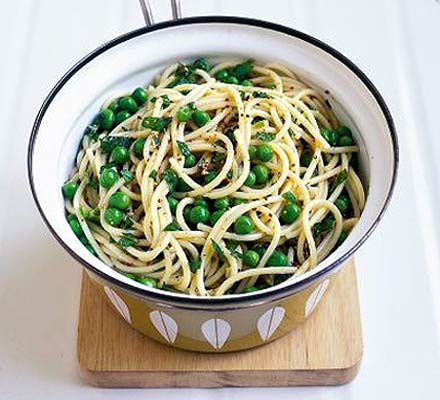
Eating Difficult Foods: Spaghetti and Peas


Facing a dinner plate filled with unfamiliar foods can be unnerving especially during a formal dinner or business lunch.  Equally challenging are those foods we eat frequently but are known to squirt, spray, or splatter. Knowing how to eat these difficult foods can really make all the difference between having a miserable time or a fabulous one.

Seldom are we faced with peeling an orange using only a fork and knife, a skill that can be quickly acquired with a bit of practice. But we do encounter other foods that can be challenging. Today I address spaghetti and peas.

When eating spaghetti, unless you are a child, do not cut the pasta. Likewise, do not snap it in half before cooking it. This delightful food is meant to be twirled. Though some people will correctly argue that Italians would never twirl spaghetti on a spoon, it is a method used widely especially in North America. Capturing a few strands with your fork tines and twirling them near the inner rim of your plate also ensures a safe journey to the mouth. If the spaghetti is in a broth like sauce, no one should wince if you use a spoon for twirling. The objective is to avoid splattering yourself or your neighbors.

Peas roll. They can seem to come alive on your plate and roll around as if to escape capture. Similar to not cutting your spaghetti, do not mash your peas on your plate. There are other far less barbaric and successful methods. Spearing for example is perfectly acceptable. Incorporating peas with other foods simultaneously on your fork is always helpful. Americans though can mount quite a pile on their forks with the aid of either a knife or small piece of bread, a wonderful edible pusher. I find they attach handily to mashed potatoes or almost anything with a bit of sauce. Do not fall prey to the practical trap of using a spoon to eat peas, unless you are a small child.

Friday, October 19, 2012

The Etiquette of Listening


When someone is talking to us, we should make an effort to listen to what he or she is saying. It’s only polite. Whenever we have something to say, we certainly want people to listen; otherwise why bother?

The art of listening can be complicated even though it may seem to only require one’s ears and attentive mind. There are many advantages to mastering this skill. For one thing, what others say can reveal, inform and educate us about news, opinions, and facts. Sometimes what is being said is important and we want to hear every word. Many times it can be boring or useless information. But out of politeness and good manners, we must try our hardest to pay attention.

Large gatherings can present challenges to listening. The noise levels can reach a fever pitch making it practically impossible to hear another person speaking. This puts listening at a great disadvantage. Large groups tend to evolve into many small groups rather quickly helping us to be able to focus on those near at hand. In these situations, speak clearly and look directly at the person to whom you are speaking. This helps you gauge levels of comprehension and interest. When listening, look at the person’s lips a well as eyes. I am amazed how well so many people can lip read when pressed.

Avoid looking over the shoulder of someone who is speaking to you. Distractions of others entering the room are inevitable, but averting one’s eyes from the speaker to catch a glimpse of something or someone who may be more interesting is simply rude. We all know what it feels like to suddenly be left speaking to someone who has completely disengaged from the conversation. We don’t like being ignored or displaced, so why do it to others?

Lectures can be particularly difficult to hold one’s attention for too long unless the subject is gripping or the speaker is captivating. If our attention wanders off in a daydream, it might be just when some brilliant concept is clearly explained, falling on deaf ears. Before going to a talk, especially in the evening after dinner when falling asleep is easy, I make sure I have something to write on or record so I can take a few notes. When paying close enough attention to take notes, missing key points is less likely. Great information, often unrelated to the main topic, emerges almost as a bonus!

Remembering what people have said when one is distracted is practically impossible. Although we can actually hear more than one conversation at a time, we really only listen to one at a time, missing out on the others. This can happen with peoples’ names, important dates, or major talking points. When this happens, refocus on one conversation and let go of other distractions. In casual conversations this is less critical than it is in a business setting. However, when vital information slips one’s mind, the best way to handle the situation is to ask for it to be repeated. Being honest with colleagues instills trust. We all become distracted from time to time. 

People come to us in times of need, when there may be some acute stress in their lives. Often times, they may want an opportunity to vent or express their emotions. Sometimes they are looking for answers or guidance. By listening to them carefully, we can discern what they are really looking for and act accordingly.

Interacting socially occurs in one’s business life as well as one’s personal life. Navigating social mores can be daunting to anyone slightly shy. Talking about one’s own life can be one manner of coping; however, good manners and etiquette are about putting others first. Resist speaking only about yourself and your experiences, and ask questions of others about their lives and opinions. 

A good rule of thumb is to notice when we are talking about ourselves or when we become too intense about any subject. Try shifting the emphasis over to what is interesting to the other person, which gives you a chance to make sure they are as interested in the matter at hand as you are. 

Don’t repeat what someone has just said as a way of indicating you understood what was spoken. This interrupts the person speaking. Occasionally this may be appropriate, but is not a good practice. Many of us develop speech patterns, and listening patterns, too! Repeating conversations is akin to interrupting. By carefully listening to what someone is saying we not only demonstrate respect, we might learn something, too!

Wednesday, October 3, 2012

And Like a Good Neighbour……


We all live in a community of one kind or another. It’s what we do as humans. Connecting with other people is essential to our physical, mental and emotional health.

As a small child, I remember riding my bicycle or skateboard around my neighborhood without realizing how much I was actually observing. Over time, subconsciously I knew the routines of dozens of households. I knew when they mowed their lawns, when and where they walked their dogs, entertained friends and family, were away on vacation, etc. Taking mental note of when everything is ‘right with the world’, gives us a sense of safety and security. Over time, we notice what is normal, and more importantly when something isn’t quite right.

When one is a child, life is simpler in many ways. As we grow up, our lives take on different meanings and responsibilities. We don’t have the same time to cruise the ‘hood as we once did and see who was up to what. However, to maintain our sense of safety and security, we need to reconsider just how important ‘having a snoop’ can be.

There are obvious signs that things are different when we notice newspapers piling up outside a neighbor’s front door. We might see long grass growing where a perfectly manicured lawn once covered someone’s front lawn. The usual routine is out of sync. Some neighbors are more conscious of these differences and become concerned.

Depending on the size and demographics of a neighborhood determines just how involved people become in one another’s lives. In communities where there is a high concentration of children, many parents form associations where shared active patrols help ensure safety. Such safety comprises the basic common sense observations of loitering, vandalism, and anything else that is out of the ordinary. When something appears out of place, the authorities should be summoned. After the facts are assessed and dealt with appropriately,, necessary actions are taken to return things to normal. There are many successful models used to protect children from kidnapping, bullying, and many other dangers.

In communities populated by senior citizens, similar measures are usually put into place from the start. Transportation and health issues, proper nutrition and hygiene, and depression and loneliness might be the everyday battles neighbors may encounter. For those of us who live in communities like this, keeping an eye out for one another is de rigueur, or at least it should be. By the time we have reached our golden years, we have had experiences that allow us to act in a supportive way.

Safety is paramount. If one follows the guideline of strengthening the weakest link first, one must then have one’s priorities in order. Sadly today, this is not happening, at least it is not happening enough. If it were, we would not be sending one in six children to bed hungry. We would not be living in a world where 60% of men don’t know it’s against the law to hit someone, especially one’s spouse, domestic partner, child, or pet. We would not be facing such issues as suicide prevention, bullying, domestic violence and abject poverty.

Since there is clearly a different set of priorities at play at the government level, the responsibility lies within each of us to protect and improve our communities, relying where we can on municipal assistance. Smaller civic groups do form and do accomplish much good. And we can do more.

Take the time to explain to children what living in community is all about. They must learn to be aware of how they interact with others and the impact such interactions have. We need to understand the difference between being nosy and being responsible. Helping neighbors who are in need is part of our civic duty. Following the Golden Rule leads to healthier stronger neighborhoods and communities.