Showing posts with label driving. Show all posts

Thursday, April 6, 2017

Cell Phones and Texting are Hazardous to Safe Driving

Worth repeating. This is a column that I wrote a number of years ago, but never appeared on social media. Today, texting still kills.


Between an influx of questions to my inbox about cell phone etiquette and texting, and the latest plea from Oprah Winfrey to stop using these devices while driving, I decided to address this important issue from the point of view of doing the right thing. As I have repeatedly expressed in previous columns, etiquette is based on common sense. In the case of texting while driving, this is a total lack of common sense. Anything that distracts a driver of a motor vehicle from his full attention to the road is dangerous, and potentially deadly. It is dangerous to him, to the passengers in his car and to any other passengers in other vehicles sharing the same road. I think we can all agree that safety should be the highest priority when we are behind the wheel of a car.


It has been proven that the brain's activities are focused differently when multi tasking. Talking on the phone qualifies as a task and is not related to driving. Some will be quick to argue that there is no difference between speaking on a hand held phone than talking to a fellow passenger. This is incorrect and ridiculous. The person with whom you are speaking on a cell phone is probably unaware that you are driving; is certainly unaware of the road or traffic conditions; and is totally incapable of being another set of eyes for you while navigating the roadways. The person sitting in the car can stop talking or call attention to something missed by the driver i.e. a potential hazard, etc.

When I was gathering content for this article, I asked a friend about his feelings on this subject. He said that he agreed with the basic premise, but that he had a business and he had to talk on the phone, or he would lose business. He also went on to inform me that it is against the law in many places to pull off to the side of the road except in the case of an emergency, and that I had better check my facts before passing out advice. What he failed to mention is that it is illegal in many places to use a hand held cell phone while driving. I smiled and nodded thankfully and conceded that he had raised some good points. Then I began to think about this whole picture because it was flawed in my mind. The scary part of his arguments is that they are what many cell phone users feel - they are entitled to do.


This is where I employed common sense and the wisdom and pleas of Ms. Winfrey. We’re really dealing here with a matter of priorities. Life itself does take precedence over everything else. Very few people have business, which is so urgent that a phone call cannot be returned or handled later in the day. If you are responding to a medical emergency, natural disaster, or catastrophe and must get in touch with the necessary parties, these are legitimate reasons to have to use a cell phone. Surely one's life or the life of other people would never, ever be considered less important. I think this points out one of the biggest problems of cell phones and PDAs today. People suddenly are so important that their phones must be answered immediately. This is actually a snap shot of self-importance. 

People have a distorted sense of reality. As a result of this egotistical view of the world, we show incredible disrespect for those around us. Last week I discussed the rudeness of private conversations in public places. Now you can add cars to the list of places not to have conversations on the phone. This extensive use of cell phones is indicative of how out of control society is in terms of its humanity.
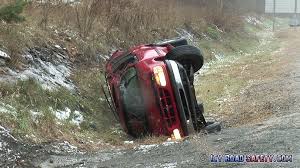
Texting takes distraction to a whole other level. It is not dissimilar from fidgeting and looking for hidden controls or anything else that takes your eye off the road. I experienced this first hand while driving and looking for a heater control while driving on an icy road. It took literally a split second and the Land Cruiser was off the road and upside down in a ditch. We were lucky that no one in the car was hurt or killed. I will tell you that experiencing such a traumatic accident first hand changes a person's point of view in a hurry and permanently.

One friend of mine says that if someone wants to drive by themselves and fidget with the radio, or chat on the phone that is one thing; but if she's going to be in the car, it's not going to happen. That's one viewpoint, but does not take into account other travelers or the precious life of the driver.

It's clear that these thoughtless and reckless driving distractions and behaviors will be outlawed soon. However, it does not take a law to engage common sense. Think about how precious life is and how many things we have for which to be grateful. Think about how our actions can affect others. If we take the time to think about these simple truths, respecting one another on the roadways is pretty easy. Sadly there are many people who dial up the phone or begin texting as soon as they get in the car, much the way some people light up a cigarette, chew gum, apply mascara and drink coffee while driving. Unfortunately, the phone is even more dangerous than cigarettes. Maybe one day soon common sense will be more common and we will do the right thing.


Thursday, November 4, 2010

More Civility on the Roads

I received this letter from a reader several weeks ago. As I was sitting at my desk watching winter approach, I thought that perhaps a column addressing driving might be a good idea. Driving in the snow and ice of New Brunswick present its own set of problems. Let’s first address the concerns of this reader.

Dear Jay:

I was disappointed that your previous column, "Civility rules on the road, too," did not address civility between different users of the road, as for example, automobiles and pedestrians or automobiles and bicycles.

In particular, I wish that more automobile drivers were aware of the following:

1) Your "right" to make a right turn at a red light is limited by the presence of pedestrians crossing the road in front of you.

2) Even though pedestrian-activated red lights are not part of what you personally may consider to be part of the normal signal cycle, you are still required to stop for them. If you fail to notice them in time because you are driving too fast or because you are overly distracted, as for example by your cell phone, it is your responsibility to amend your behavior, not the pedestrian's responsibility to stay out of your way.

3) Where a sidewalk crosses the entrance or exit to a driveway or parking lot, pedestrians on the sidewalk have the right of way, as do cyclists moving along the right-hand side of the road. You are required to wait until the way is clear for you to proceed. Patience is a virtue, possess it if you can...

4) Cyclists are required to ride along the right-hand side of the paved roadway. They are not required to ride on unpaved surfaces, across broken glass, through potholes that would rip their front wheels off, etc. If the presence of a cyclist at the right-hand side of the paved roadway does not leave enough room for you to pass, this does not give you license to run the cyclist off the road. You need to wait until you have room to pass safely. Patience is a virtue...

And finally, a word addressed specifically to young male drivers:

While you personally may think it fun to yell at pedestrians and cyclists as you go by in order to see if you can make them jump, no one else thinks it's fun. Grow up - or turn in your license until you're mature enough to handle it.

S.R.W.

Dear S.R.W.,

Thanks for pointing out these important rules which people do tend to forget. There is a civility which must be practiced while driving, peddling and walking so no one gets injured. It is advisable for pedestrians to walk on the left side of the street, thereby facing into oncoming traffic. This enables them to clearly see approaching vehicles and step off the road surface if possible as they pass. Cyclists need to stay to the far right hand side of the road when motor vehicles are passing. In many communities there are actual bike lanes specifically designated for their safety. The addition of more of these lanes will only enhance the safety of those riding bikes. Motor cycles and automobiles must follow traffic rules carefully and be prepared for any surprises that a pedestrian or cyclist may present. Even though there are designated cross walk areas in many towns, out of town visitors, of which we have many here in this tourist town, may be unaware of them and are particularly vulnerable.

Children need to learn about traffic and traffic rules at an early age. Although there are often well marked signs prohibiting bicycles on sidewalks, a lot of folks are unaware of them. Children feel and are safer riding on the sidewalks, signs or no signs. However it is up to a parent to teach their children that pedestrians have the right of way on or off sidewalks. This is an easy way to begin to instill the concept of respect for other in the minds of our youth. Being aware of traffic safety regulations protects youngsters against traffic dangers.

As far as driving around here in the winter, the same rules apply. However, because it is far more difficult to stop or swerve on an icy pavement, great caution must be practiced. Test your brakes from time to time as road conditions change. Drive defensively and slower than you normally would. There are also deer that leap onto the road coming seemingly out of no where. To enable you to be as safe as possible in the winter, make sure your car is winterized by a licensed mechanic. Keep warm clothes or blankets in the car. Remember to charge your cell phone and carry it with you in case of an emergency. Tell someone where you are going and when you expect to return. If you are going to travel a long distance, check road and highway conditions before hand to be prepared for any delays. By taking these few precautionary measures, your winter travel will be safer. Erring on the side of caution demonstrates the respect you have for your fellow travelers and for you as well.